How to Prepare Your Plumbing System for Winter in Mallorca
When people think about preparing pipes for winter, it's easy to picture climates far harsher than Mallorca's. Here there are rarely prolonged frosts, but that apparent mildness hides a problem of its own: variability. Within a few hours a mild afternoon can turn into a cold night with a tramontana wind blowing, and it's precisely these sharp swings in temperature and humidity that put the most strain on a system that, for most of the year, needs no special care at all.
Pipework exposed to the outdoors
The first thing to check is any pipework exposed to the outdoors: runs along façades, patios, terraces or garden areas without protection. Although temperatures rarely drop below zero on the coast, inland areas or those at higher altitude, such as the Serra de Tramuntana, can see nights close to freezing, especially where pipes are thin or poorly insulated. Simple thermal insulation, or at least shielding from direct wind, greatly reduces the risk of water cooling too much inside the pipe and of micro-cracks appearing as the material expands and contracts with temperature changes.
Outdoor taps, irrigation and the pool
Outdoor taps deserve particular attention. It's common for them to be used daily in summer for watering the garden, filling the pool or washing the car, and then to be completely forgotten for weeks during winter. Before the first cold snaps arrive, it's worth closing the specific stopcock for those taps if the installation allows it, and draining any water left in the final stretch of pipe so a particularly cold night doesn't leave standing water inside a valve that could later crack. Checking the seals and the condition of the hoses at the same time avoids surprises when they're used again in spring.
Before a cold snap: small leaks
Another key moment is right before a sudden cold snap, something that does happen in Mallorca with polar air masses or spells of northerly wind. On those days it's worth checking for any existing leaks, however small: a drip that's barely noticeable in summer can become a bigger problem if the water pooling around a pipe cools sharply. Using mild days to review the overall condition of the system, check for damp patches on walls or under sinks, and seal small leaks is far cheaper than repairing a burst pipe in the middle of a storm.
Autumn rain: downpipes, gutters and inspection chambers
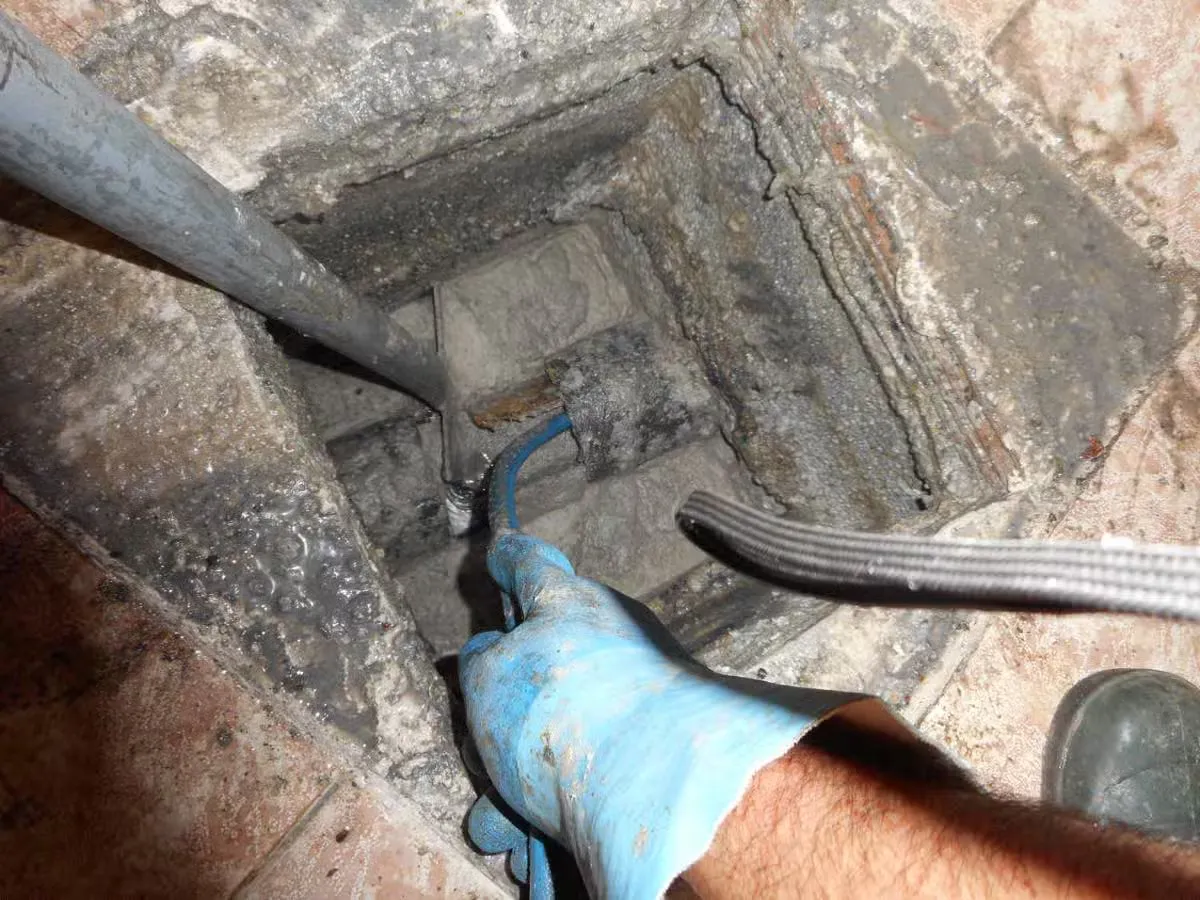
In Mallorca, the biggest winter threat to a plumbing system usually isn't the cold, it's the water. Heavy autumn downpours, those episodes when a few hours bring more rain than the previous months combined, put gutters, downpipes and inspection chambers to the test after a whole summer of collecting leaves, dust, sand and nests. When a downpipe is partly blocked, water can't drain away as fast as it arrives: it overflows at the joints, seeps into the façade and ends up as a damp patch on a ceiling or an inside wall.
The check is simple: clear gutters and terrace grilles, make sure water runs freely by pouring a bucket down each downpipe, and lift the covers of the chambers in the yard to look for sediment or standing water. In apartment buildings, where a single downpipe carries water from several homes, downpipe cleaning before the rainy season prevents a good share of flooded patios and garages. If the chambers fill up with soil again and again, the buried section is worth checking: tree roots cause blockages that tend to show themselves with the first heavy rains.
Second homes and seasonal properties
A particular case on the island is second homes and seasonal properties, which can sit closed for weeks or months over winter. In these cases, simply leaving the water system switched off with no prior check is not a good idea: it's worth draining circuits that won't be used, making sure the main stopcock is in good condition, and, if the property will be empty for a long time, considering shutting off the main supply altogether so an undetected leak doesn't cause significant damage while the owners are away.
If you can't turn off the main stopcock, for instance because there's automatic irrigation or someone is looking after the house, write down the meter reading before you leave. When you come back, if it has moved on more than the irrigation explains, there's a leak somewhere. Pour a glass of water down every drain before closing up as well, so the traps don't dry out and bad smells don't build up while you're away.
Cisterns and tanks: autumn is the time
Many houses on the island, especially country properties off the mains network, depend on a cistern or a raised water tank. In winter consumption drops and the water is refreshed less often, but it's also the season when the cistern collects rainwater. That's why autumn, with the level low after the summer, is a good time to empty it and have it cleaned before it fills: little water is wasted and the tank stays clean for the whole season. Rooftop tanks exposed to the tramontana also benefit from a check of their lids and insulation.
When you return to a house that's been closed for months, run the water at every tap and shower for a few minutes before using them normally, starting with the points furthest away. The water heater and the pipework have spent all that time with standing water, and refreshing it is a simple, common-sense step.
Stopcocks and valves: make sure they work when you need them
The limescale in the water across much of the island has a little-known effect: stopcocks that aren't touched for months tend to seize. People often find out at the worst possible moment, with a leak under way and a valve that won't turn or starts dripping when forced. Opening and closing every stopcock a couple of times a year, in autumn and spring, and knowing in advance where the main one and each zone valve are located saves a great deal of time and damage when an emergency comes up.
The same goes for outdoor tap valves and the meter valve: if any of them is stiff, broken or leaking, replace it calmly in autumn rather than waiting until you need it on a stormy night.
An autumn check prevents most emergencies
At Tuberías y Aljibes we've spent more than fourteen years working on plumbing systems across the whole island, from flats in Palma to houses in the mountains around Sóller, in both permanent and seasonal homes, and we know that most winter emergency call-outs could have been avoided with a preventive check in autumn. Spending one afternoon inspecting exposed pipework, outdoor taps, downpipes and possible leaks before the cold arrives is the simplest way to avoid nasty surprises and to reach spring without unpleasant setbacks.
Frequently asked questions
Can pipes freeze in Mallorca?
On the coast it's very unusual, but inland and in the Serra de Tramuntana there are nights close to zero. The most vulnerable sections are thin pipes exposed to the wind and outdoor taps holding water. Insulating them and draining taps that aren't in use is enough for most houses.
Should I turn off the main stopcock if the house is empty all winter?
If nobody will be visiting for weeks, it's the safest option, because a small leak can run for a long time without anyone noticing. Before you turn it off, check whether automatic irrigation, a cistern pump or other equipment depends on the water supply. If you can't turn it off, note the meter reading so you can compare it when you're back.
When should downpipes and gutters be checked?
Ideally in late summer or early autumn, before the first heavy rains, which cause the most damage when they meet a blocked downpipe. In houses with trees nearby, it's worth repeating the check once the leaves have fallen. In apartment buildings, the most practical approach is to include it in the building's annual maintenance.
What should I check when reopening a seasonal property?
Open the main stopcock slowly and watch for noises, drips or new damp patches. Run the water at every tap and shower, refill the traps and check that the drains empty normally. If the property is let, our guide to preparing a holiday rental has the full checklist.
Related services
Where we work
Keep reading
24h emergency unblocking
Emergency: +34 695 787 366