Tree Roots: The Hidden Enemy of Pipes in Mallorca
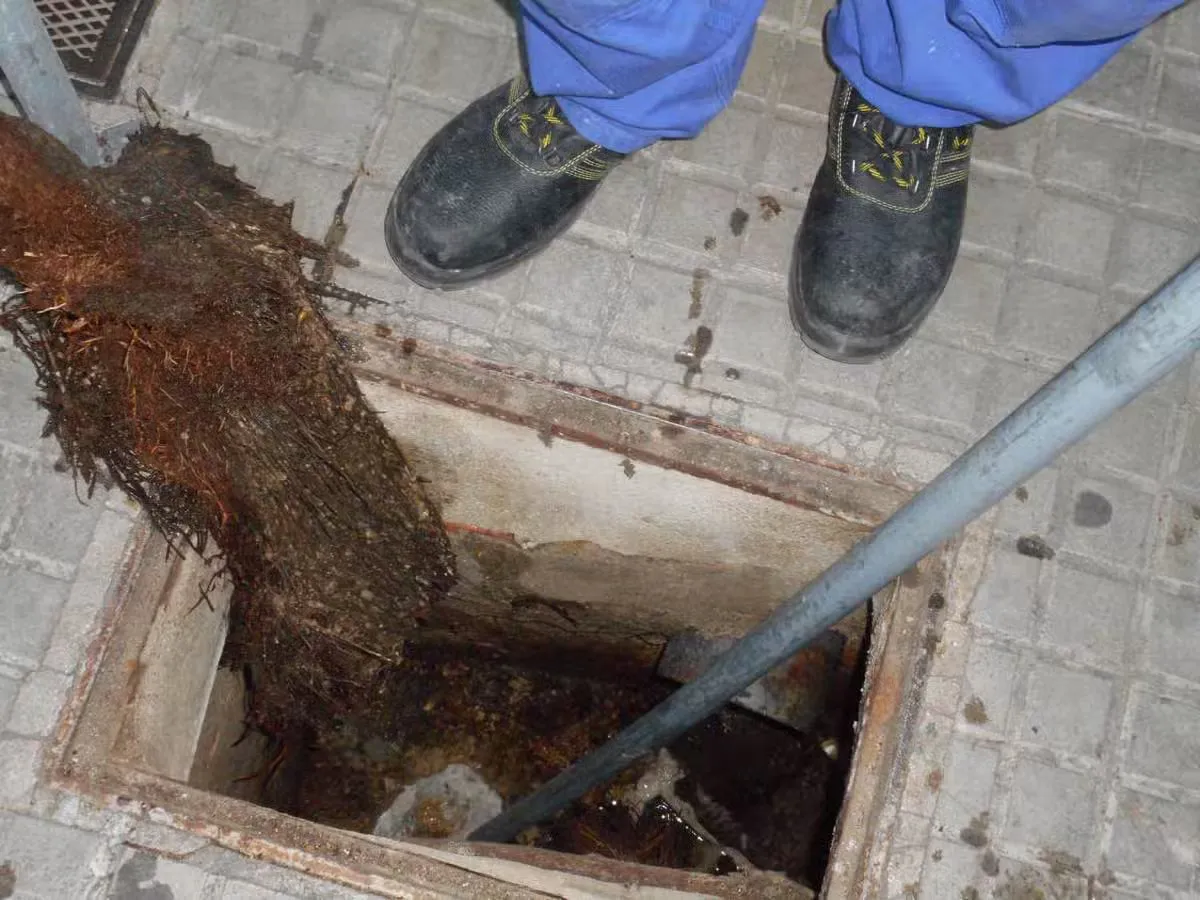
On many rural and urban properties across Mallorca, an almond tree, a carob, a fig, or a pine grows right next to the house, often having been there for decades, long before the current drainage system was installed. That same tree that gives shade and belongs to the landscape can, without anyone suspecting it, be the reason a house's pipes keep clogging over and over. Tree roots are one of the most persistent — and least visible — enemies of any drainage system.
How roots get into a pipe
The mechanism is simple to understand, even if its effect is slow. A drainage pipe carries water almost constantly, which makes it a very attractive source of moisture for the roots of a nearby tree, especially during dry spells or in the dry soils that dominate much of the island. Roots, in their search for water, detect the moisture seeping through joints, small cracks, or unions that aren't perfectly sealed, and work their way into the pipe through those weak points. Once inside, they don't stop growing: what starts as a thin root thread ends up becoming a tangled mass that shrinks the pipe's usable diameter and traps grease, paper, and sediment as it passes.
Why it's such a common problem in Mallorca
Mallorca has particular conditions that make this problem more common than many owners realize. It's not unusual to find rural and urban properties with large trees and extensive root systems planted right next to pipework, often installed decades ago with materials and joints less resistant than today's. The combination of older pipes, soil that stays dry for much of the year, and mature trees close to the pipe runs creates the perfect scenario for root intrusion, both in single-family homes and in rural estates with their own cisterns and drainage networks.
Which trees and which pipes cause the most trouble
Not all trees behave the same way. Fig trees and ficus have a well-earned reputation: their roots are very efficient at finding water and reach further than you'd expect. Pines, so common in coastal developments, spread shallow roots that quickly find drains buried not far below the surface, something we see often in areas such as Calvià. On inland estates, centuries-old carob and almond trees share the ground with chambers and pipes that were laid long after they were planted.
The type of pipe matters as much as the species. Older concrete, clay or asbestos-cement installations, with mortar joints that crack over the years, are the most vulnerable. PVC with properly made joints holds up better, but it isn't immune: a badly glued joint, some ground settlement or a chamber with a broken cover is enough to let roots in. And a garden with automatic irrigation running alongside the drain line draws even more roots towards it.
Warning signs
There are several warning signs worth paying attention to. A drain that empties more and more slowly, with no obvious cause, is one of the first symptoms. Gurgling sounds when a sink, bathtub, or toilet drains also point to air not moving normally through the pipe, often because of a partial obstruction. Recurring blockages — ones that clear with a one-off unblocking but come back weeks later at the same spot — are one of the clearest signs that the problem isn't superficial. And in more advanced cases, the ground near the pipe run may sink or soften, a sign that the pipe has been damaged and is leaking water into the subsoil. Bad smells in yards and inspection chambers are another common clue, because the root mass holds dirty water in place permanently.
How it's fixed
The solution always starts with an accurate diagnosis before any action is taken. A CCTV camera inspection can pinpoint exactly where roots have entered the pipe and assess the extent of the damage, avoiding blind digging. From there, mechanical cutting with electromechanical spirals fitted with cutting heads removes the root from inside the pipe and restores its full diameter, a far more lasting fix than a manual unblocking, which only clears a temporary gap through the tangle of roots. In cases where the pipe is fractured or badly deteriorated, repairing or replacing the affected section may be necessary.
After cutting, a high-pressure water flush removes the root fragments, grease and sediment the tangle had been holding, leaving the pipe clean across its full diameter. That's the step that turns a cut into a complete pipe unblocking: without it, the debris tends to form a new plug further down the line within a few weeks.
Why roots come back if they're only cut
It's worth being clear about one thing: cutting the root clears the blockage, but it doesn't close the door it came in through. If the joint is still open, the tree will colonise the same spot again, and usually vigorously. So after a cut, the sensible thing is to decide what to do about that weak point: repair it or replace the section if the damage justifies it, or book a camera check a few months later to see how things are developing.
Felling the tree isn't always necessary or desirable, and it doesn't deal with what's already inside: the roots occupying the pipe stay there even if the tree is gone. Nor do we recommend pouring root-killing products down the drain yourself, because they don't remove the obstruction and can damage the installation. On properties with a septic tank, roots also affect the tank and the drainage field, and these are worth checking as part of septic tank maintenance.
Prevention
Prevention also plays an important role: periodically checking pipes near large trees, especially in properties over twenty or thirty years old, makes it possible to catch root intrusion at an early stage, when the fix is far simpler and cheaper than once the problem has already caused structural damage to the system.
If you're planting, it's worth finding out first where the pipes run and keeping large trees well away from the drain line; in small gardens, root barriers can be fitted in the planting hole. And if you're buying a house with a mature garden, a camera survey of the main drain before signing tells you whether there are roots inside and what state the installation is in. At Tuberías y Aljibes we've spent more than fourteen years cutting roots and cleaning drains all over Mallorca, and we handle emergencies 24 hours a day on 695 787 366.
Frequently asked questions
Can roots from my neighbour's tree get into my pipes?
Yes. Roots don't respect boundaries and can travel quite a distance to reach a damp joint. If the tree is on the neighbouring plot, a camera inspection documents the point of entry and lets you raise it with your neighbour with evidence in hand.
How often should a pipe that has had roots be checked?
After a cut, it's usual to check the section with a camera a few months later to see whether the root is growing back. From then on, the frequency depends on what's found: if the joint has been repaired, an occasional check is enough; if not, regular maintenance is advisable.
Do the products sold for killing roots work?
On their own they don't solve the problem: they don't remove the tangle already blocking the pipe or repair the joint it came through, and used carelessly they can damage the installation. The sensible approach is to look at the section with a camera first and remove the root mechanically.
Do floors have to be broken up to remove roots?
Usually not. The cutting is done from inside the pipe, working through a chamber or access point, and the camera then confirms the pipe is clear. Only when the pipe is broken or crushed does it need opening up to repair the affected section; and if the blockage is urgent, our 24-hour emergency unblocking service is available.
Related services
Where we work
Keep reading
24h emergency unblocking
Emergency: +34 695 787 366